

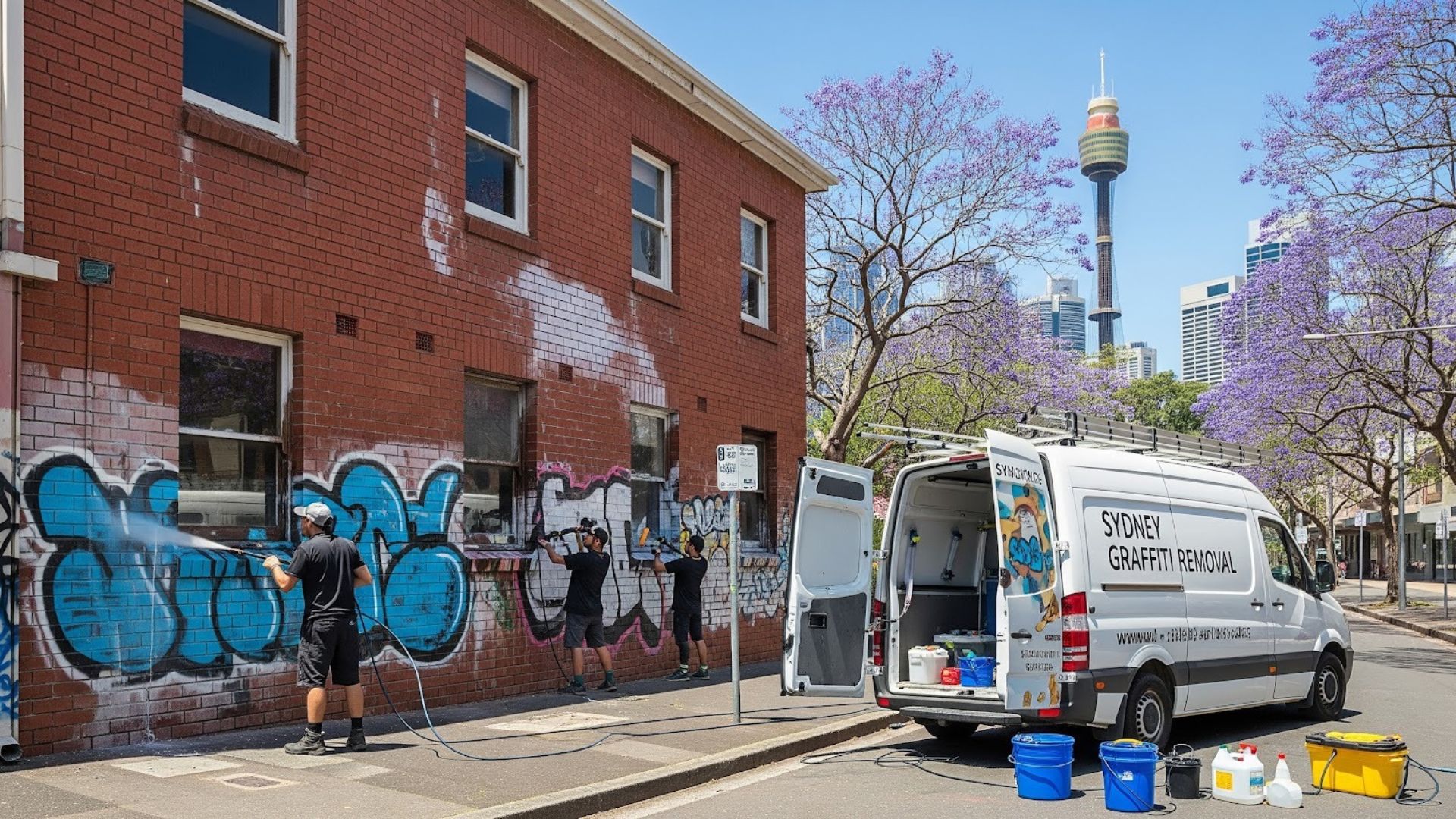
Graffiti can turn up overnight on shopfronts, fences, loading docks, schools, and public facing assets. Graffiti removal quite simply takes them away.
If it’s left in place, it often attracts more tagging, creates a perception of neglect, and can affect customer confidence and site pride.
But thankfully professional graffiti removal services like us at Cleanway are here to get graffiti removed from most surfaces across Australia.
In this guide, we’ll cover why fast graffiti removal matters in Sydney, what safe and effective removal typically involves, which surfaces need special care, and how to reduce repeat vandalism, and all without risking damage to assets or the environment.
Why prompt graffiti removal matters (and the 24–48 hour rule)
Across Sydney, one of the most reliable deterrents is simple: remove graffiti quickly.
Many property and facilities teams aim to remove graffiti within 24–48 hours where practical.
The faster it disappears, the less “reward” there is for repeat offenders, and the less likely it is that the site becomes a hotspot.
Operational and reputational impacts of leaving graffiti in place
- Repeat incidents: Graffiti that remains visible can signal an easy target.
- Brand and tenant confidence: Graffiti on entry points, signage, or customer areas can affect perception immediately.
- Asset damage over time: Some paints and inks can stain porous substrates if they cure or penetrate.
- Extra cost later: Older graffiti often needs more dwell time, repeat applications, or stronger methods—raising cost and risk of surface damage.
What “professional graffiti removal” actually involves
Graffiti removal isn’t a great one-size-fits-all initiative that many other companies might suggest it is.
The safest results usually come from matching the method to the surface, paint type, and location (for example, near stormwater drains, landscaping, or high traffic pedestrian zones).
Common methods used by professional graffiti remover teams
- Surface-specific chemical removal agents: Formulated to lift paint without etching or bleaching the substrate.
- Controlled high pressure cleaning: Used carefully to avoid scarring soft materials (and to prevent driving pigment deeper into porous surfaces).
- Gel systems for porous masonry: Helps draw graffiti out of brick and stone while minimising spread into the substrate.
- Steam or low pressure hot wash options: Useful in sensitive environments where dust, overspray, or run off needs tight control.
- Wastewater capture and containment: Critical in many commercial and public locations to reduce the risk of contaminants entering stormwater.
Why “quick DIY fixes” to remove graffiti can backfire
It’s understandable to want a fast fix, but aggressive DIY methods can permanently damage surfaces—especially older masonry, render, painted facades, and architectural finishes.
- Abrasive sanding can permanently scar brick faces, timber, and protective coatings.
- Household bleach or harsh solvents can discolour surfaces, leave “ghosting,” and create hazardous residues.
- Uncontrolled pressure washing can etch concrete, strip coatings, or force pigment deeper into porous substrates.
If you’re dealing with a large area, a heritage surface, a public-facing asset, or a location near drains, it’s typically safer to engage trained technicians with the right controls in place.
Graffiti removal by surface type: what to expect
Different materials absorb paint differently, which changes the removal approach. Below is a practical overview of common Sydney asset surfaces and what professional removal usually prioritises.
Brick and masonry
- Often requires specialised gels designed for porous surfaces.
- Focus is on lifting pigment while protecting mortar joints and preventing staining.
- May need multiple passes for deep penetrating inks.
Concrete and render
- Typically responds well to controlled pressure cleaning paired with suitable removal agents.
- Rendered surfaces can be more delicate, so technique matters to avoid patchiness or surface breakdown.
Glass and smooth non-porous surfaces
- Usually allows for more straightforward removal with non-abrasive methods.
- Goal is a clean finish without scratching or streaking.
Metal (Colorbond, steel, aluminium, roller doors)
- Needs care to preserve factory coatings and prevent dulling.
- Professional teams select agents that minimise finish damage and reduce shadowing.
Timber and painted surfaces
- Often the highest risk for DIY damage due to absorption and coating sensitivity.
- May require a test patch to confirm paint system compatibility.
Stone and sandstone
- Can be highly porous and sensitive, particularly on older or heritage assets.
- Approach often prioritises low impact techniques and, where suitable, future protection coatings.
Environmental and compliance considerations (especially around runoff)
Graffiti removal isn’t just about appearance.
It can also involve managing residues (think things like paint particles, chemical agents, and contaminated wash water) so they don’t enter stormwater systems or sensitive areas.
Key risk areas to plan for
- Stormwater drains and kerb lines: Run off control may be required to minimise environmental impact.
- Public footpaths and entries: Pedestrian safety, signage, and timing (after hours works) can reduce disruption.
- Food or high hygiene sites: Method selection should consider overspray control and suitable containment.
- Traffic and access: Loading docks, carparks, and road adjacent assets may require traffic management planning.
For many organisations, the best outcome is a removal process that is both effective and defensible, especially where internal EHS requirements, contractor management, or council reporting obligations apply.
I also recommend reading this blog on Building Facade Maintenance to get a better understanding of what is involved and where some regulatory aspects come into play across Australia.
How to choose a graffiti removal provider in Sydney
For facilities managers, strata managers, councils, and operations teams, a reliable provider is one that can remove graffiti quickly without creating new asset issues (surface damage, ghosting, or uncontrolled run off).
A practical checklist to use when comparing providers
- Response times: Can they realistically attend within 24–48 hours when needed?
- Surface capability: Can they demonstrate experience across brick, render, metal coatings, and timber?
- Safety controls: Do they provide site specific SWMS, exclusion zones, and (where needed) working-at-heights controls?
- Environmental controls: Do they plan for wastewater containment and appropriate disposal pathways?
- Evidence and accountability: Do they provide before/after photos, job notes, and consistent reporting?
- Insurance and professionalism: Are they fully insured and set up for commercial and public sector sites?
Preventing repeat graffiti: practical, low disruption options
Removing graffiti is step one. Reducing repeat incidents is step two—and it’s often where the long term savings are found.
Protection coatings (anti-graffiti systems)
- Sacrificial coatings: Designed to be removed along with graffiti, then reapplied.
- Permanent coatings: Create a barrier that makes future removal faster and less intrusive.
- Best for: High repeat locations such as alleyways, rear elevations, utility enclosures, and public facing walls.
Site measures that can deter vandalism
- Improve lighting: Focus on concealed corners and blank walls.
- Reduce “blank canvas” walls: Landscaping, screening, or surface changes can reduce appeal.
- Upgrade CCTV placement: Prioritise clear angles on entry points and high-value surfaces.
- Rapid removal program: A consistent, quick response is often the most effective deterrent.
Mini example: a typical “fast removal” scenario (and why it works)
Scenario: A Sydney industrial facility finds fresh tagging on a roller door and adjacent brick wall at the main entry. The site is customer facing and receives deliveries from 6:00 am.
- Priority: Restore professional presentation before peak traffic and reduce likelihood of repeat tagging.
- Approach: Isolate the work zone, apply surface appropriate removal agents, use controlled pressure cleaning, and manage wash down run off.
- Outcome: Clean finish with minimal shadowing and reduced disruption to operations, plus a clear baseline for future monitoring.
How Cleanway can help
Cleanway supports organisations that need fast, compliant outcomes for complex site cleaning and waste challenges.
Where graffiti removal forms part of broader asset presentation and maintenance, our teams can help plan a safe approach that prioritises surface protection, site controls, and practical scheduling.
- Industrial and civil capability: High pressure cleaning and capture methods suited to operational environments
- Safety-first delivery: Site-specific controls to minimise risk to people, assets, and surrounding areas
- Compliance mindset: Practical documentation and a focus on defensible outcomes
Next step: If you’re planning a graffiti removal program for 2026—or need a one off clean up—visit Cleanway to request a quote or discuss the right approach for your site.
Suggested visual for this post: Before/after photo pair of a brick wall or roller door (include a caption noting surface type and method used). Add alt text such as: “Before and after graffiti removal on brick wall in Sydney.”
Frequently asked questions
How quickly should graffiti be removed?
Where practical, many sites target 24–48 hours. Fast removal helps deter repeat vandalism and reduces staining risk on porous surfaces.
Can graffiti be removed without damaging brick or render?
Yes—when the method is matched to the substrate. Porous materials often need specialised products and a controlled process to avoid etching, patchiness, or shadowing.
Is graffiti removal environmentally risky?
It can be if run off enters stormwater or residues are unmanaged. Professional teams plan for containment and appropriate disposal pathways to minimise environmental impact.
Do anti-graffiti coatings work?
In many high repeat locations, yes. They can reduce labour and cost for future removals by creating a barrier between paint and the underlying surface.