

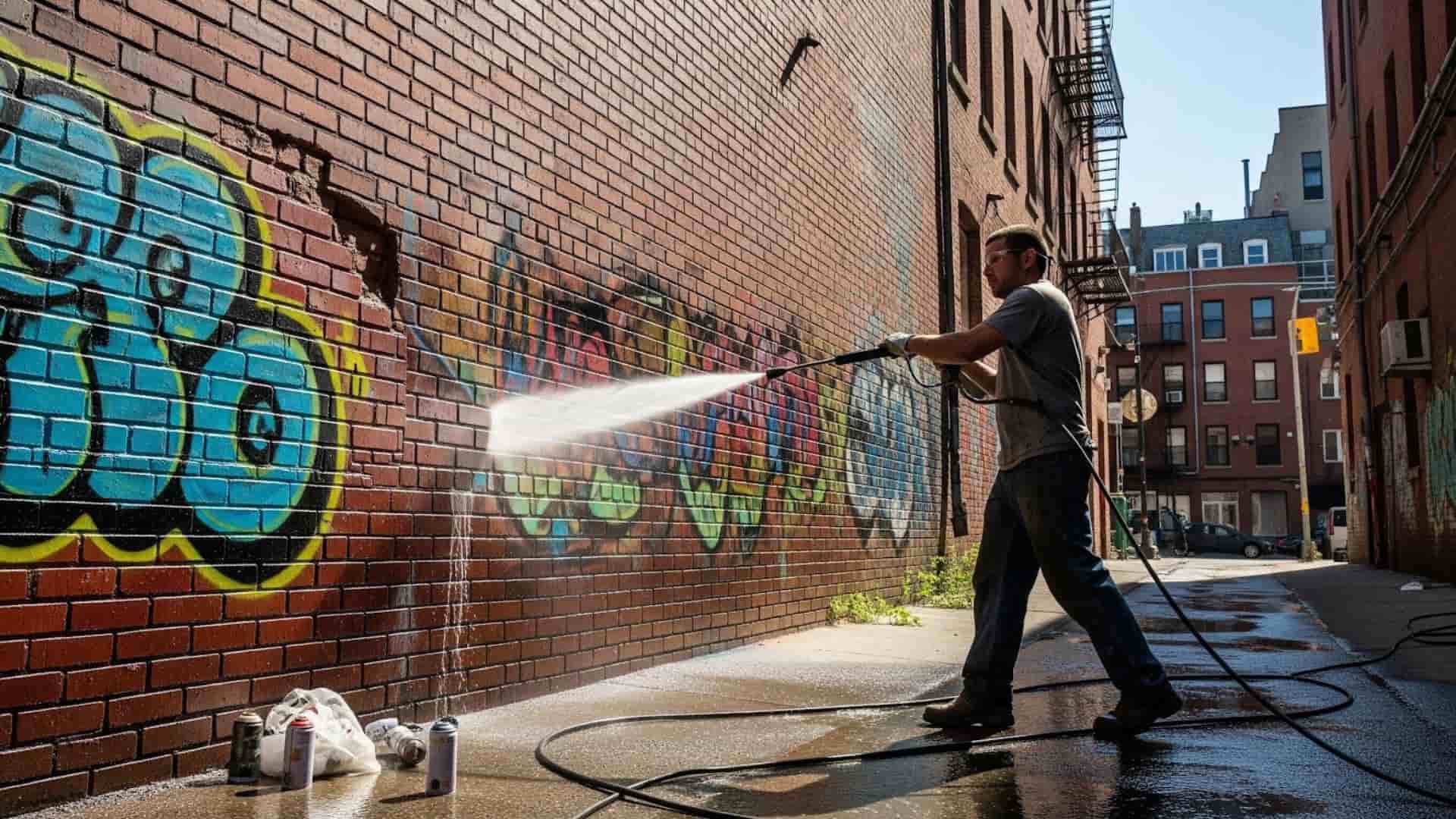
Professional graffiti removal services are a necessary part of any functional city. Us at Cleanway helps to keep government and private Australian buildings free from graffiti vandalism and other unwanted spray paint.
It’s an unfortunate aspect of city life that graffiti ends up where it shouldn’t. But, luckily, graffiti removal products work.
What’s more, there are ways to implement a complete graffiti removal system that helps to prevent further defacement of properties.
This blog explores some of the more common graffiti removal products and techniques used in major Australian cities like Sydney.
Why act quickly on graffiti
While graffiti might look nice to some, it can be a sign of neglect and decay to others. Neither of these are words you want to associate with your business.
Graffiti removal services helps to get rid of unwanted graffiti and other artwork before your walls become a ‘hot spot’.
The more graffiti you allow, the more is likely to come. Sorting it out before it becomes a real issue, as with most waste issues, is something that Cleanway frequently advocates for.
How to choose the right graffiti removal method
- Surface type: Concrete, brick and stone tolerate different pressures and chemistries than glass, signage or painted cladding.
- Age and type of paint: Aerosol vs marker; fresh vs cured coatings impact dwell time and technique.
- Location and access: Height, traffic interfaces and proximity to drains determine equipment and controls.
- Environmental sensitivity: Near waterways, hospitals or schools may require low-noise, low-odour methods and full run-off capture.
- Documentation: Some sites require before/after photos, waste manifests and chain-of-custody reporting.
Graffiti removal methods used in Sydney
1) High-pressure water cleaning (with capture)
High-pressure water removes graffiti from hardwearing substrates such as concrete, brick and stone.
The pressure is calibrated to the surface to avoid etching, and vacuum recovery units capture wash water for compliant disposal.
- Best for: Concrete, blockwork, unpainted masonry.
- Benefits: Minimal chemicals, fast coverage on large walls, reduced water use with modern capture systems.
- Considerations: Not suitable for delicate substrates or flaking heritage finishes.
2) Chemical graffiti removers (including biodegradable options)
Targeted solvents and gel strippers break down paint on porous or sensitive surfaces. Modern citrus- or soy-based formulations are effective on fresh tags and reduce harsh fumes.
- Best for: Exposed brick, painted cladding, signage, detailed surfaces.
- Benefits: Precision on small areas, lower pressure needed, reduced abrasion.
- Considerations: Requires trained handling, correct dwell times, neutralisation and controlled rinse to keep pollutants out of drains.
3) Abrasive blasting (sand, soda or vapour)
Abrasive media removes the coating mechanically. Vapour blasting (water + media) reduces dust and heat, improving control in urban environments.
- Best for: Heavy graffiti on concrete, steel, brick and durable masonry.
- Benefits: Rapid on large, robust areas; reaches textured surfaces.
- Considerations: Too aggressive for soft stone or heritage facades; requires containment and clean-up plans.
4) Dry ice blasting
Dry ice pellets sublimate on impact, embrittling paint so it releases without water or chemicals. It’s gentle on substrates and leaves minimal secondary waste (only the removed coating).
- Best for: Sensitive surfaces such as tiles, glass, electrical enclosures and equipment housings.
- Benefits: No added moisture, low residue, reduced downtime.
- Considerations: Specialist equipment and trained operators required; capture removed flakes for compliant disposal.
5) Paint-over (colour-matched recoating)
For flat-colour walls, a primed, colour-matched paint-over offers a quick, neat finish, especially when graffiti has penetrated deeply.
- Best for: Painted masonry, rendered walls, utility enclosures.
- Benefits: Fast restoration of appearance; can include a future-proof anti-graffiti topcoat.
- Considerations: Requires accurate colour matching and preparation to prevent telegraphing of tags.
6) Rope access for high or complex areas
On multi-storey or hard-to-reach assets, IRATA-certified rope access technicians reach façades safely without major scaffolding, reducing disruption and cost.
- Best for: High-rise façades, bridges, atriums, rail corridors.
- Benefits: Minimal set-up time, precise access, night or off-peak works possible.
- Considerations: Requires experienced, certified teams and site-specific permits and traffic management.
Preventive solutions: graffiti removal products, coatings and deterrents
Sacrificial vs non-sacrificial anti-graffiti coatings
- Sacrificial coatings: A transparent barrier washed away during removal and then reapplied. Suited to heritage or porous stone.
- Non-sacrificial (permanent) coatings: Durable finish that allows future graffiti to be wiped or pressure-washed off, often with mild detergents.
Choosing the right coating depends on substrate, exposure and maintenance budget. A site trial on a small area verifies finish and sheen.
Environmental and compliance considerations
- Run-off control: Use capture and filtration to prevent contaminants entering stormwater.
- Waste handling: Paint residues and slurry should be collected and disposed of under EPA guidelines.
- Documentation: Keep records of methods, chemicals and waste movements for audits and council interactions.
For guidance, see the Environmental Protection Authority (EPA) NSW resources on water pollution and waste classification: epa.nsw.gov.au.
Costs and timeframes: what to expect with graffiti removal services
- Key cost drivers: Surface type and condition, size of area, height/access complexity, method required, and need for coatings.
- Typical durations: Small tags can be removed in 1–2 hours; large or multi-level projects may span an evening or staged program.
- Response times: Same-day or next-day attendance is often achievable in metropolitan Sydney, subject to site access and permits.
- Value adds: Including an anti-graffiti coating during remediation lowers whole-of-life costs for sites hit repeatedly.
Mini case study: overnight restoration of a CBD façade
Situation: A food and beverage client’s sandstone-and-painted façade was tagged at street level and on Level 3 signage late on Friday.
Approach: Cleanway mobilised a rope access team and high-pressure clean and capture unit. Painted sections were treated with a biodegradable gel remover and low-pressure rinse. Sandstone received controlled vapour blasting. All run-off was vacuum-recovered and waste documented.
Outcome: The site was restored before opening on Saturday. No substrate etching, zero stormwater impact, and a clear report with before/after images and disposal records. A semi-gloss non-sacrificial coating was applied to the lower façade to streamline any future clean-ups.
What not to do to remove graffiti
- Don’t use high pressure on soft stone, heritage renders or ageing paint systems — it can etch or delaminate surfaces.
- Don’t rinse chemicals into stormwater drains — capture and dispose in line with EPA expectations.
- Don’t attempt rope work without certification and a safe work method statement (SWMS).
- Don’t delay — the longer paint cures, the more aggressive the required method becomes.
At the end of your day, your best bet is to consult our expert Cleanway team. We know what do to when it comes to graffiti removal.
Why facilities choose Cleanway for graffiti removal in Sydney
- Safety and compliance first: EPA-aligned methods, run-off capture, and complete reporting.
- Specialist capability: High-pressure clean and capture, dry ice and vapour blasting, and IRATA-certified rope access.
- Responsive and reliable: Rapid mobilisation across metropolitan Sydney with minimal disruption.
- Sustainable options: Biodegradable cleaners and circular-economy thinking to minimise environmental impact.
- Customer-first service: Clear scopes, fixed quotes where feasible, and photo documentation.
Request a quote or book a site assessment and get a tailored plan for your site.
FAQs
How fast should graffiti be removed?
Ideally within 24–48 hours. Fast removal deters repeat tagging and reduces the need for harsher methods.
Will the method damage my surface?
Professionals match technique and pressure to the substrate, and test on a small area first to minimise risk.
What about chemical safety?
Technicians use the least hazardous effective product, apply with PPE, control run-off, and provide Safety Data Sheets on request.
Can you work at night?
Yes. Night or off-peak works are common in busy precincts to minimise public disruption.Next step: Talk to Cleanway about a rapid graffiti removal plan and optional anti-graffiti coatings for ongoing protection.