

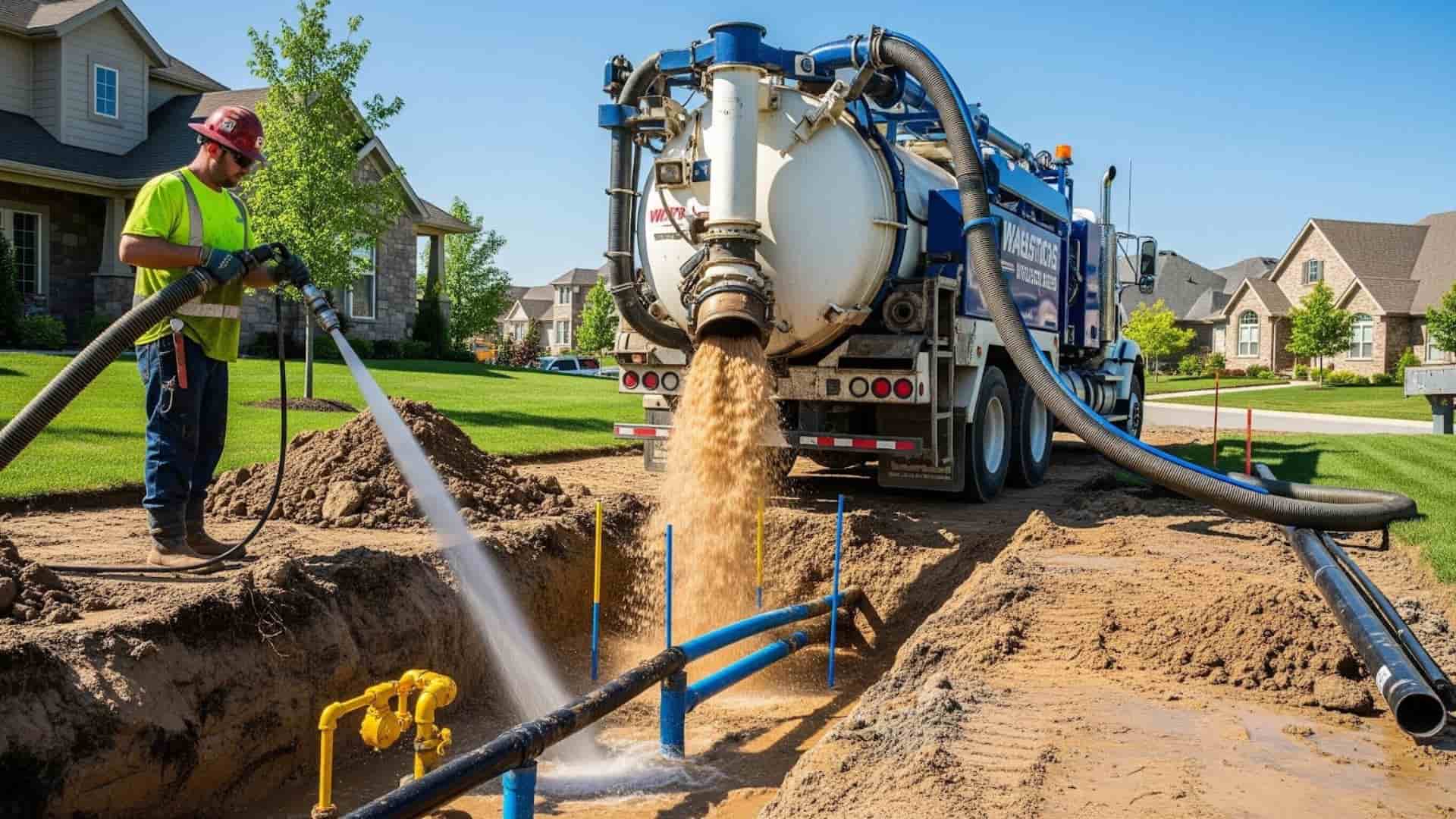
Non destructive digging (NDD) is a method to remove soil to service underground utilities without damaging them or potentially contaminating the soil.
Sometimes called non destructive excavation, it uses hydro vacuum excavation trucks and can be more complicated the more traditional excavation methods (where dirt is usually moved with simple diggers).
It’s popularity in Sydney comes from our extensive underground infrastructure systems, like gas lines, telecommunication lines, and stormwater drains. Such underground assets can be damaged by traditional digging methods, so we developed non destructive digging to protect them.
Additionally, non destructive digging is a far more environmentally friendly method as the loosened soil across the excavation site is safely returned after the excavation process.
This blog outlines some benefits of non destructive digging and why it is such an essential civil service for major Australian cities like Sydney.
What is Non-Destructive Digging (NDD)?
The method “daylights” utilities with high accuracy while minimising the risk of strikes. For complex urban environments like Sydney, non destructive digging is the preferred approach for utility locating, verification, maintenance and emergency works.
How Non Destructive Digging Works (Step-by-Step)
1) Pre-locate and plan
Before you dig, confirm what’s underground and where. Use plans, dial-before-you-dig information, and utility locating methods (EMF locators, ground penetrating radar) to mark indicative alignments. This informs a safe, targeted NDD approach.
2) Safe site setup
Establish traffic and pedestrian control, isolate hazards, and set spill prevention measures. Confirm permits and environmental controls, especially in sensitive zones or near waterways.
3) Hydro-excavate
A water lance cuts soil at controlled pressure to loosen material without harming pipes, conduits or cables. Operators adjust pressure for different ground conditions ( clay, sand, fill, compacted soil).
4) Vacuum and contain spoil
A high-flow vacuum draws the slurry into the truck’s sealed tank. This keeps the work zone clean, improves productivity, and prevents run-off into drains.
5) Expose and verify utilities
Crews carefully daylight assets to confirm depth, alignment and condition. This physical verification reduces strike risk for subsequent works and supports design adjustments.
6) Reinstatement
Upon completion, the area is backfilled and made safe. If required, reinstatement is done to council or asset-owner specification to restore pavements, verges or surfaces.
7) Reporting and chain of custody
Quality providers document locations, depths, photos and any asset anomalies. Spoil movements are tracked with manifests to suitable disposal or treatment facilities.
Why NDD is Essential in Sydney
Sydney’s ageing and expanding underground networks leave little margin for error. NDD significantly reduces the likelihood of strikes, costly delays and environmental harm.
- Safety first: Minimises risk to crews and the public by avoiding live services.
- Precision: Millimetre-level exposure enables accurate tie-ins and designs.
- Efficiency: Faster, cleaner excavation with smaller footprints in busy streets.
- Compliance: Supports Environmental Protection Agency (EPA) expectations for safe, environmentally responsible works and spoil handling.
- Versatility: Works in tight urban corridors, around tree roots, and in mixed ground conditions.
Common Use Cases for Non Destructive Digging in Civil and Industrial Projects
- Utility locating and verification (daylighting) before trenching, HDD or piling.
- Service connections and tie-ins for power, water, sewer and comms.
- Fault finding and emergency repairs for burst mains or damaged conduits.
- Asset maintenance around substations, pits, valve boxes and manholes.
- Road, rail and light-rail upgrades, where dense services are expected.
- Tree root protection during urban landscaping projects.
- Sites with contamination risks where clean capture and controlled disposal are required.
Compliance, Safety and Environmental Considerations
Working in or near live services requires strict controls. A professional NDD provider will build safety and compliance into every step.
- Permits and approvals: Confirm road occupancy, council permits and asset-owner permits before works.
- EPA-aligned spoil management: Capture and transport liquid and solid spoil to licensed facilities. Keep manifests and chain-of-custody records.
- Environmental controls: Use bunding and drain protection to prevent run-off. Manage noise and dust per local requirements.
- Utility tolerance: Respect asset owner’s minimum approach distances and verification requirements.
- Competency: Use trained operators with the right equipment, PPE, and safe work method statements (SWMS).
For regulatory guidance, consult the NSW Environmental Protection Agency (EPA) for environmental obligations and waste transport requirements.
Cost Drivers and How to Plan Your Non Destructive Digging (NDD) Scope
NDD is typically billed by time on site, disposal volumes and any traffic or reinstatement needs. Smart planning keeps costs predictable.
- Access and traffic control: Inner-city set-ups can require extra traffic management.
- Ground conditions: Hard clays or reinforced surfaces may take longer to penetrate.
- Depth and diameter: Deeper or wider test holes increase time and spoil volumes.
- Spoil classification and disposal: Contaminated spoil requires licensed handling and can increase costs.
- Documentation: Survey, photos and as-built reporting add value for future works.
Planning tips:
- Define target locations from utility plans before the crew arrives. Book access windows and permits early to reduce idle time.
- Combine NDD with complementary tasks (e.g., pit cleaning or high-pressure clean-and-capture) to maximise value in one mobilisation.
How to Choose the Right NDD Provider in Sydney
Look for practical experience, compliance credentials and responsive service. A reliable partner will protect your people, schedules and budget.
- Safety first: Demonstrated SWMS, training, and incident-free performance.
- EPA alignment: Clear processes for spoil classification, transport and disposal.
- Fleet capability: Modern hydro-vac trucks sized for urban access and volume needs.
- Rapid response: Ability to mobilise for emergency repairs 24/7.
- Reporting: Photos, locations and depths captured and shared promptly.
- Local knowledge: Experience with Sydney councils, utilities and traffic conditions.
We also recommend reading the blog What to Expect During a Non Destructive Digging (NDD) Job to get a better understanding of what might be expected during the process.
Mini Case Study: Emergency Valve Replacement in Western Sydney
Situation: A distribution site reported a leaking water valve beneath a busy driveway.
Plans indicated multiple services running in parallel.
Approach: An NDD crew established traffic control, set drain protection and used hydro excavation to daylight the valve and adjacent comms conduits.
Spoil was vacuumed into the truck and contained. The plumber accessed the valve without damaging neighbouring assets.
Outcome: The repair was completed the same day. No service strikes, minimal surface disruption, and the driveway was reinstated before evening operations resumed.
Why Choose Cleanway for Non Destructive Digging in Sydney
Cleanway delivers fast, compliant non destructive digging (NDD) across Sydney and NSW — protecting people, assets and the environment.
Our integrated civil and environmental services make us a practical partner from investigation to reinstatement.
- Safety and compliance: EPA-aligned collection, transport and disposal processes with full traceability.
- Modern fleet: Hydro-vac trucks sized for CBD access and higher-volume digs.
- End-to-end service: NDD, high-pressure clean-and-capture, pit and tank cleaning, and hazardous waste solutions.
- Rapid response: 24/7 availability for emergency works to minimise downtime.
- Clear reporting: Photos, utility depths/locations and manifests provided for audit and design records.
Need help now? Spill or urgent repair? Call our 24/7 team and we’ll mobilise and contain the issue quickly and safely.
Ready to plan your next project? Request a quote with Cleanway or book a free waste audit to identify compliance and cost-saving opportunities.
FAQs: Non Destructive Digging in Sydney
Is NDD suitable for all ground conditions?
Yes, with the right technique. Operators adjust water pressure and method for clays, sands, made ground and compacted subgrades. Extremely hard surfaces may need a pilot cut before hydro excavation.
What happens to the liquid spoil?
Spoil is captured in the truck and transported for disposal or treatment at licensed facilities. Manifests document chain of custody for audit and compliance.
How deep can NDD safely excavate?
Depth depends on access, stability and project needs. Typical verification holes range from 0.5–2.0 m, but deeper excavations are feasible with appropriate shoring and controls.
Does NDD reduce project risk?
Significantly. Physically exposing services removes uncertainty from plans alone. This reduces strike risk, unexpected delays and rework.
Conclusion: Build Safety and Certainty into Sydney
Non-destructive digging is the safest, most precise way to locate and verify underground services in Sydney.
It keeps people safe, protects assets and maintains compliance — all while accelerating works.
Partner with a provider who brings practical expertise, rapid response and rigorous reporting.