
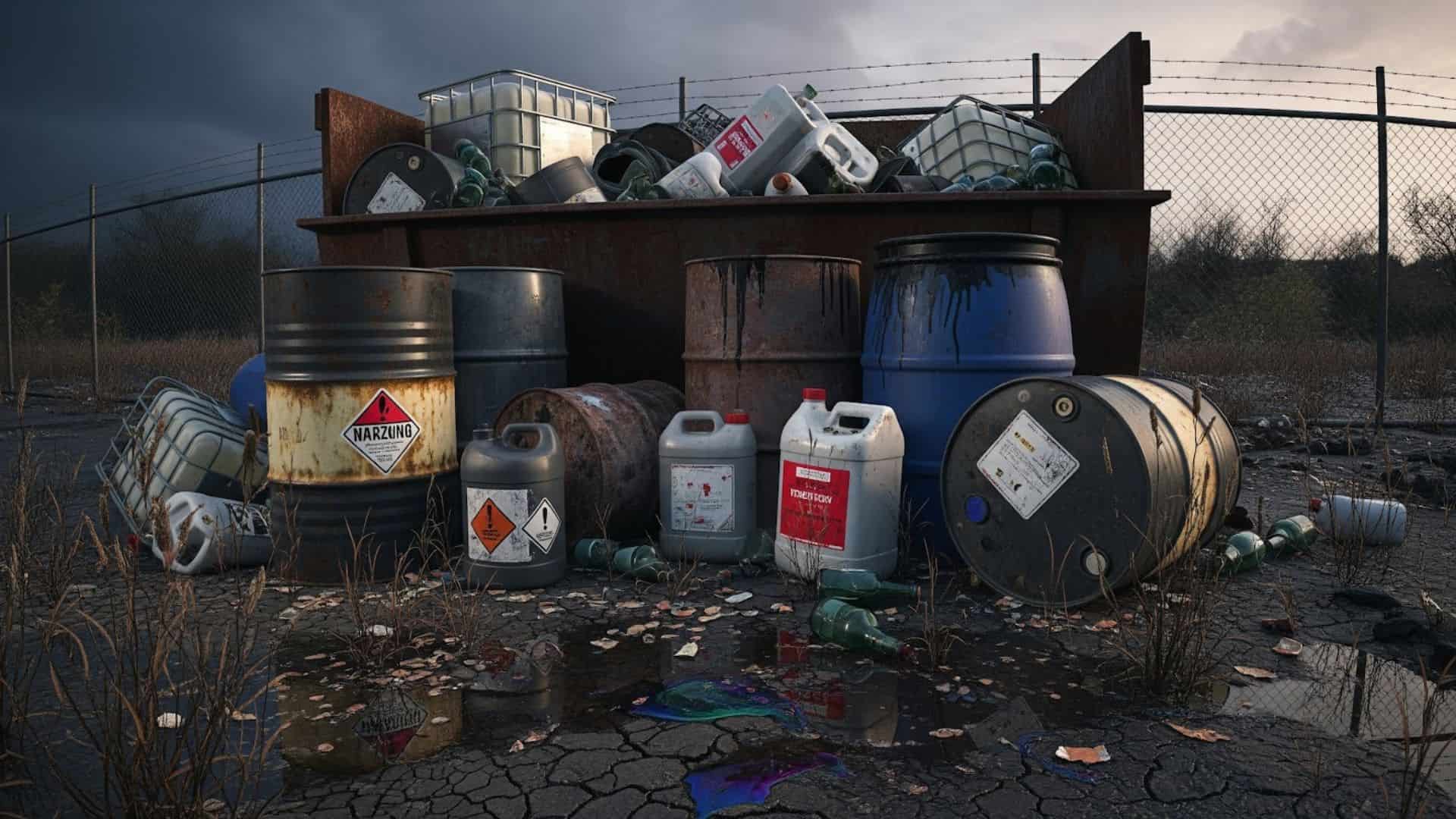
Safe chemical waste disposal options have been devised to ensure that this type of waste is managed in a safe and secure way.
Both hazardous and chemical waste can be harmful to human health and the environment – their names, to the average reader, makes this self evident.
But what’s often forgotten is that safe disposal options do not come as easily. They require expert chemical and hazardous waste management teams like those found at Cleanway.
This blog explores seven common chemical waste disposal methods used in Australia and the Melbourne area. Ultimately, whatever method chosen, the goal is to safely dispose of waste.
What is chemical waste disposal in Melbourne?
Chemical waste disposal is the safe collection, treatment, and final disposition of hazardous substances so they no longer pose a risk to people, assets, or the environment.
There are many ways that chemicals can inconvinence both businesses and households.
Whether it’s unwanted household chemicals, industrial waste, hazardous materials, or even weed killers, chemical waste comes in many forms and requires the disposal expertise of a company like Cleanway.
In Victoria, disposal must align with requirements set by the Environment Protection Authority (EPA Victoria). For current rules and guidance, see EPA Victoria.
7 proven chemical waste disposal methods used in Melbourne
There are many chemical waste disposal methods that a company like Cleanway might use. This decision often comes down to various factors like transportation, risk, and cost.
While we list the 7 common methods used below, we also recommend reading our blog Chemical Waste Disposal Frequently Asked Questions to get a fuller picture of the process.
1) Recycling and reuse
Many chemicals can be recovered and reused, reducing both cost and environmental impact.
Common examples include
- solvents,
- used oils, and e-waste streams with recoverable metals.
- Solvent recovery for closed-loop reuse.
- Used oil reprocessing into base oils or energy recovery fuels.
- E-waste dismantling to recover precious metals.
2) Chemical treatment and neutralisation
Treating chemicals to reduce hazard or toxicity is a mainstay of compliant disposal. It often precedes further treatment or discharge (where permitted).
A technique commonly used is the neutralisation of acids and bases to stabilise pH.
However, depending on the technology and expertise on hand, there is also the option for oxidation/reduction to transform toxic compounds and precipitation to remove heavy metals from wastewater.
3) Incineration and thermal destruction
High-temperature, controlled combustion breaks down hazardous constituents and reduces waste volume significantly, leaving a stable ash for final disposal.
This destroys toxins and pathogen, leading to significant volume reduction for transport and landfill. However, strict emissions controls and continuous monitoring is required due to the potential for air pollution.
4) Secure landfill disposal
When waste cannot be recycled or thermally treated, approved secure landfills provide engineered containment. This commonly includes double liners and leachate collection systems.
But with landfills, groundwater monitoring and site controls are essential for stabilised residues and certain non-recyclable hazardous solids.
5) Biological treatment methods
Biological processes use organisms to degrade or immobilise contaminants under controlled conditions.
- Bioremediation: microbes break down organics in soil or water.
- Phytoremediation: plants absorb or neutralise pollutants. Often applied to low–moderate contamination in situ or ex situ.
6) Onsite treatment plants
Batch or continuous treatment for process effluents requires trained personnel, documented procedures, and regular audits.
7) Professional waste management collection and disposal services
Licensed providers handle identification, packaging, transport, treatment, and reporting end-to-end. This helps to reduce risk and simplify compliance.
Companies typically will engage in sampling and classification to determine the correct method, chain-of-responsibility and manifesting, as wel as consolidated reporting for audits and regulator requests.
How to choose the right chemical and hazardous waste disposal method
The right approach depends on the waste profile and your operational constraints. A formal waste characterisation is the first step.
- Waste type and composition: acids/bases, solvents, oils, metals, PFAS, pesticides.
- Physical form: liquid, sludge, solid, contaminated soil.
- Volume and frequency: one-off clean-outs vs routine collections.
- Contaminants and incompatibilities: avoid reactive mixtures.
- Regulatory requirements: classification, storage, tracking, and permits.
- Logistics and access: bunding, decanting needs, tank or pit access.
- Cost, risk, and sustainability targets: prioritise recycling where feasible.
When to call a professional
Some scenarios demand immediate specialist support. Do not attempt to neutralise or mix unknown chemicals onsite.
- Any spill, release, or unknown substance present.
- Fuming, heat, pressure build-up, or odour from stored containers.
- Acids, cyanides, oxidisers, peroxides, or mixed solvents with uncertain compatibility.
- Confined spaces, pits, tanks, and interceptors requiring entry.
- Regulatory inspections or audit findings that require corrective action.
At Cleanway, our general recommendations is that you do not do anything you are not comfortable with or if the waste substance is harmful in any way.
How Cleanway simplifies compliance, safety, and reporting
Cleanway delivers end-to-end chemical waste solutions across Melbourne and the eastern seaboard. We’re built around safety, compliance, and practical expertise.
- Site-specific audit and classification: sampling, SDS review, and waste profiling.
- Safe packaging and labelling: UN-rated containers, segregation, and bunding.
- Transport and chain-of-responsibility: compliant vehicles and trained operators.
- Best-fit treatment: recycling where possible, then treatment or secure landfill as required.
- Transparent documentation: manifests and disposal certificates for your audit trail.
- 24/7 emergency spill response: rapid containment and remediation to minimise downtime.
- Outcome: reduced regulatory risk, safer sites, and measurable progress against sustainability goals.
Mini case example: solvent clean-out at a food manufacturing site
A Melbourne food manufacturer needed to clear mixed solvents and process chemicals ahead of an equipment upgrade. Unknown containers and limited access increased risk.
Identification and segregation: Cleanway sampled unknown drums and grouped compatible streams.
Recovery first: clean solvent fractions were processed for recycling and reuse.
Treatment for the rest: contaminated residues went to thermal destruction.
Zero downtime during production: collections scheduled off-peak with safe loading zones. Full reporting: itemised manifests and certificates issued for the client’s audit file.
Hazardous Waste Management Compliance essentials in Victoria
- Classify your waste correctly before movement or treatment.
- Store in compatible, closed, and labelled containers with secondary containment.
- Maintain an inventory and safety data sheets (SDS) accessible to staff and responders.
- Use licensed carriers and approved facilities, and retain records for audits.
- Train staff on emergency response and keep spill kits appropriately stocked.
Household hazardous waste and chemical waste in Melbourne
For households, use programs such as Detox Your Home and permanent drop-off centres. Never pour chemicals down the drain or into bins. Store upright, sealed, and clearly labelled until disposal. Quick checklist: prepare your chemical waste for collection
Confirm classification and volumes; provide SDS where available. Seal, label, and segregate incompatible materials (e.g., acids vs bases). Ensure clear access routes and safe loading areas.
Have spill response equipment and trained staff on standby during loading. Request disposal certificates and keep them with your compliance records.
Next steps
Need a safe, compliant plan for chemical waste disposal in Melbourne? Book a free waste audit and let Cleanway tailor the right combination of recycling, treatment, and secure disposal for your site.